
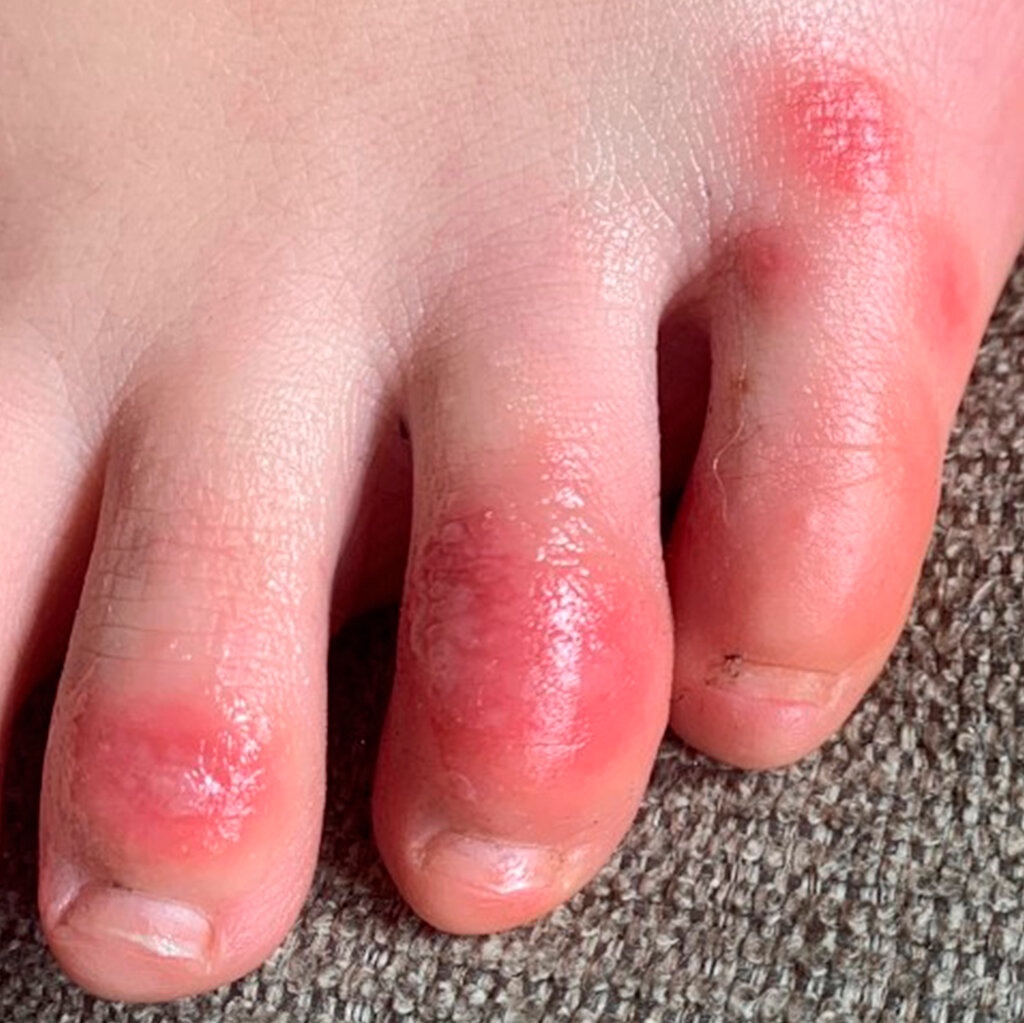
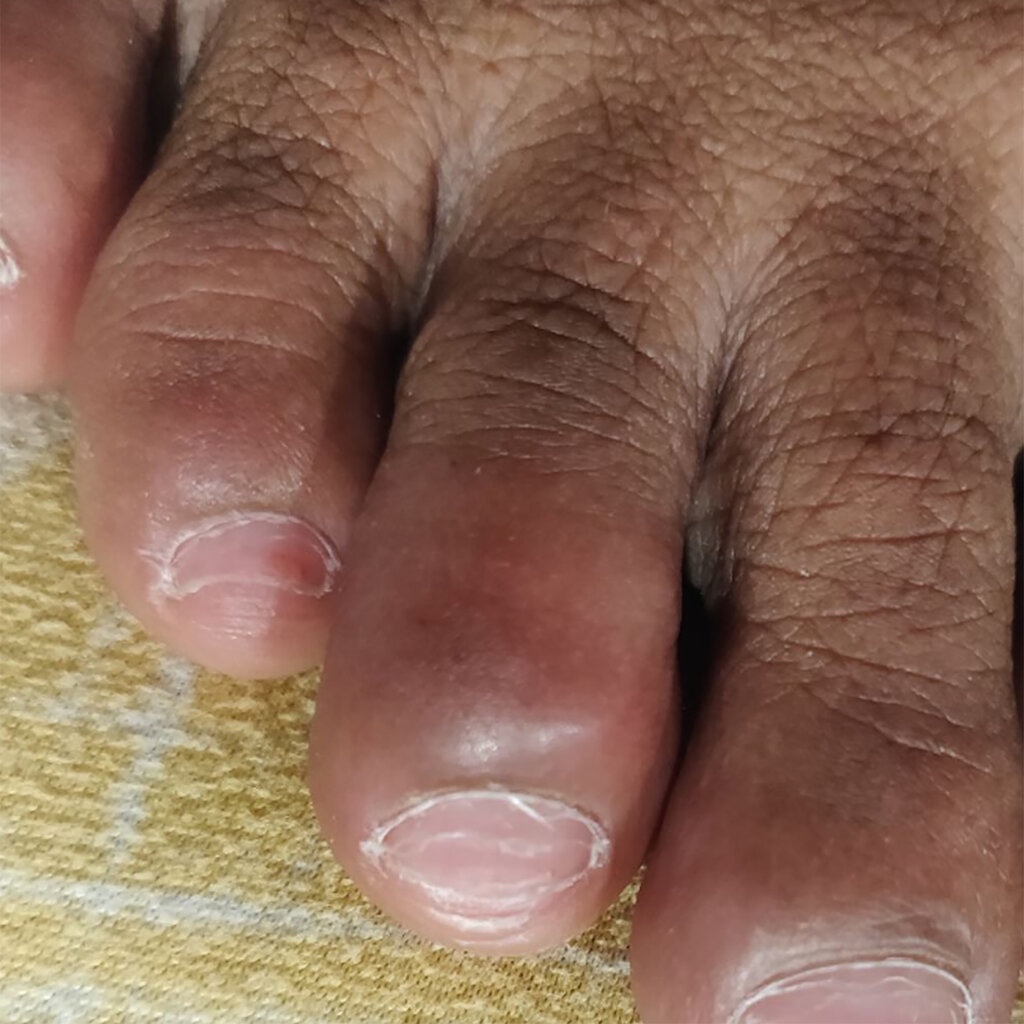
Common conditions often manifest differently on dark skin. Yet physicians are trained mostly to diagnose them on white skin.
In the spring, teenagers started showing up at doctors’ offices in droves with angry red and purple blisters on their fingers and toes. The latest unexpected feature of the coronavirus infection fascinated the public, and suddenly photographs of so-called Covid toes were everywhere on social media.
But almost all of the images depicted glossy pink lesions on white skin. Though people of color have been affected disproportionately by the pandemic, pictures of Covid toes on dark skin were curiously hard to find.
…
The problem isn’t unique to Covid toes or to social media. Dermatology, the medical specialty devoted to treating diseases of the skin, has a problem with brown and black skin.
Though progress has been made in recent years, most textbooks that serve as road maps for diagnosing skin disorders often don’t include images of skin conditions as they appear on people of color.
That’s a glaring omission that can lead to misdiagnoses and unnecessary suffering, because many key characteristics of skin disorders — like red patches and purple blotches — may appear differently on people with different complexions, experts say,
“Pattern recognition is central to dermatology, and a lot of the pattern recognition is training your eye to recognize certain colors that trigger you to think of certain diseases,” said Dr. Jenna Lester, director of the skin of color program at the University of California, San Francisco.
Physicians often say that they “do not see color,” Dr. Moulton-Levy said. “They are trying in a nice, benevolent way to say skin color doesn’t matter.”
“But it absolutely matters, in dermatology and all of health care,” she said. “‘Colorblind’ is a very difficult term for me to hear.”

www.nytimes.com/2020/08/30/health/skin-diseases-black-hispanic.html
 Connect the Dots 101
Leave a comment