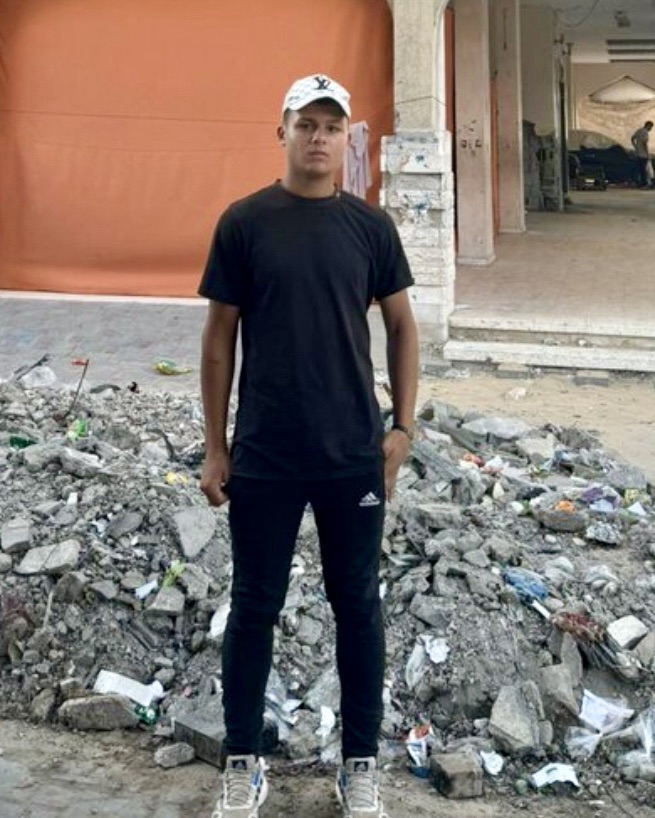
After Israeli soldiers found Mohammed Shubeir hiding with his family in early March, they detained him for roughly 10 days before releasing him without charge, he said.
During that time, Mr. Shubeir said, the soldiers used him as a human shield.
Mr. Shubeir, then 17, said he was forced to walk handcuffed through the empty ruins of his hometown, Khan Younis, in southern Gaza, searching for explosives set by Hamas. To avoid being blown up themselves, the soldiers made him go ahead, Mr. Shubeir said.
In one wrecked building, he stopped in his tracks: Running along the wall, he said, was a series of wires attached to explosives.
“The soldiers sent me like a dog to a booby-trapped apartment,” said Mr. Shubeir, a high school student. “I thought these would be the last moments of my life.”
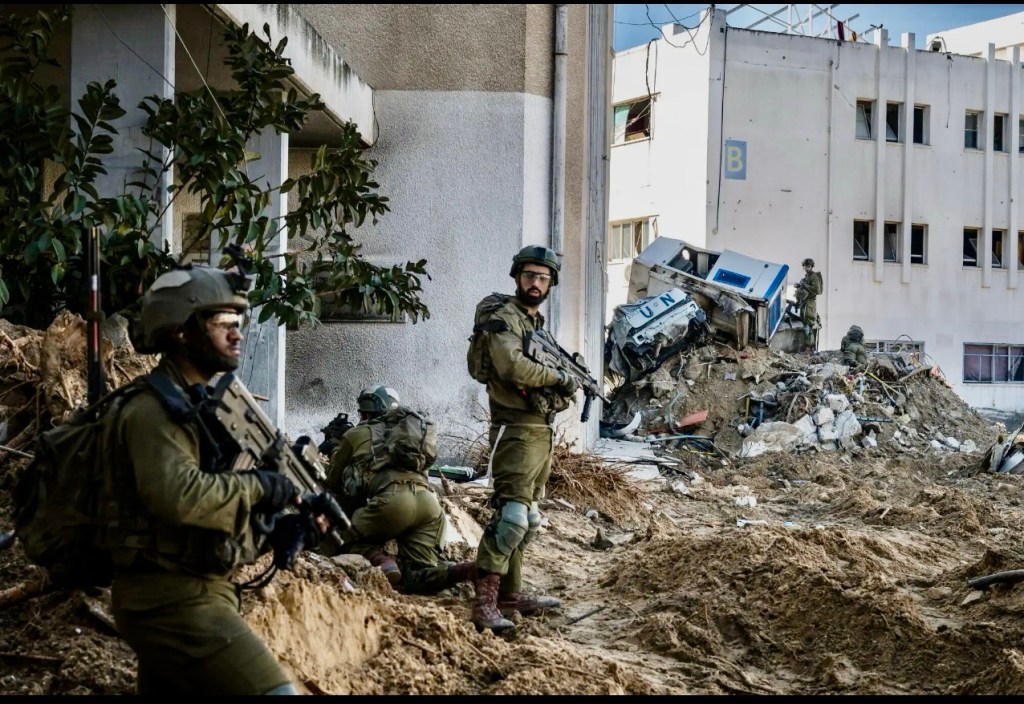
An investigation by The New York Times found that Israeli soldiers and intelligence agents, throughout the war in Gaza, have regularly forced captured Palestinians like Mr. Shubeir to conduct life-threatening reconnaissance missions to avoid putting Israeli soldiers at risk on the battlefield.
While the extent and scale of such operations are unknown, the practice, illegal under both Israeli and international law, has been used by at least 11 squads in five cities in Gaza, often with the involvement of officers from Israeli intelligence agencies.
Palestinian detainees have been coerced to explore places in Gaza where the Israeli military believes that Hamas militants have prepared an ambush or a booby trap. The practice has gradually become more widespread since the start of the war last October.
Detainees have been forced to scout and film inside tunnel networks where soldiers believed fighters were still hiding. They have entered buildings rigged with mines to find hidden explosives. They have been told to pick up or move objects like generators and water tanks that Israeli soldiers feared concealed tunnel entrances or booby traps.
The Times interviewed seven Israeli soldiers who observed or participated in the practice and presented it as routine, commonplace and organized, conducted with considerable logistical support and the knowledge of superiors on the battlefield. Many of them said the detainees were handled and often transported between the squads by officers from Israel’s intelligence agencies, a process that required coordination between battalions and the awareness of senior field commanders. And though they served in different parts of Gaza at different points in the war, the soldiers largely used the same terms to refer to human shields.
The Times also spoke to eight soldiers and officials briefed on the practice who all spoke on the condition of anonymity in order to discuss a military secret. Maj. Gen. Tamir Hayman, a former chief of military intelligence who is routinely briefed by top military and defense officials on the conduct of the war, confirmed the use of one version of the practice, saying that some detainees had been coerced into entering tunnels while others had volunteered to accompany troops and act as their guides, in the hope of gaining favor with the military. And three Palestinians gave on-the-record accounts about being used as human shields.
The Israeli military said in a statement that its “directives and guidelines strictly prohibit the use of detained Gaza civilians for military operations.” It added that the accounts of the Palestinian detainees and soldiers interviewed by The Times would be “examined by the relevant authorities.”
International law forbids the use of civilians or combatants as a shield against attack. It is also illegal to send captured combatants to places where they would be exposed to fire, or to force civilians to do anything related to the conduct of military operations.
While the laws are vaguer about the rights of people detained during conflicts with a nonstate actor like Hamas, it is illegal to force Palestinian detainees to explore dangerous places “regardless of whether those detainees are civilians or members of the fighting wing of Hamas,” said Lawrence Hill-Cawthorne, a professor at the University of Bristol in England and an expert on laws governing detention in conflicts with nonstate actors.
 Connect the Dots 101
Leave a comment