Consumer Bureau Seeks to Undo Settlement and Repay Mortgage Lender

Literally dropping the settlement sends a clear green light to businesses that discriminatory conduct is acceptable
Christine Chen Zinner, a senior lawyer at Americans for Financial Reform
Under President Trump, the Consumer Financial Protection Bureau has dropped nearly a dozen enforcement cases brought during the Biden administration, ending lawsuits against banks and lenders for a variety of financial practices that the watchdog agency no longer considers illegal.
But on Wednesday, the bureau went a step further: It is seeking to give back $105,000 that a mortgage lender paid to settle racial discrimination claims last fall.
Russell Vought, who became the agency’s acting director last month, said it had “used radical ‘equity’ arguments to tag Townstone as racist with zero evidence, and spent years persecuting and extorting them.”
In an especially strange twist, the case — against Townstone Financial, a small Chicago-based lender — was brought during Mr. Trump’s first term by Kathleen Kraninger, the director he appointed to run the consumer bureau.
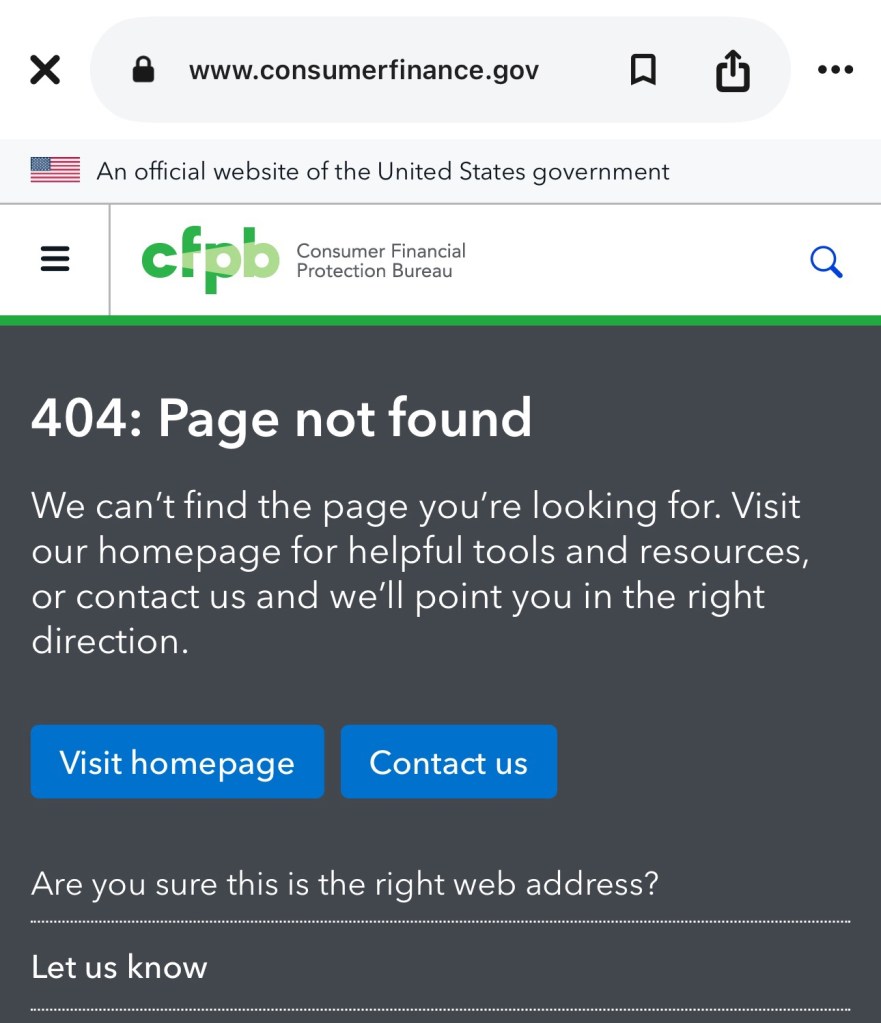
[To view agency’s rationale please consult CFPB website.]
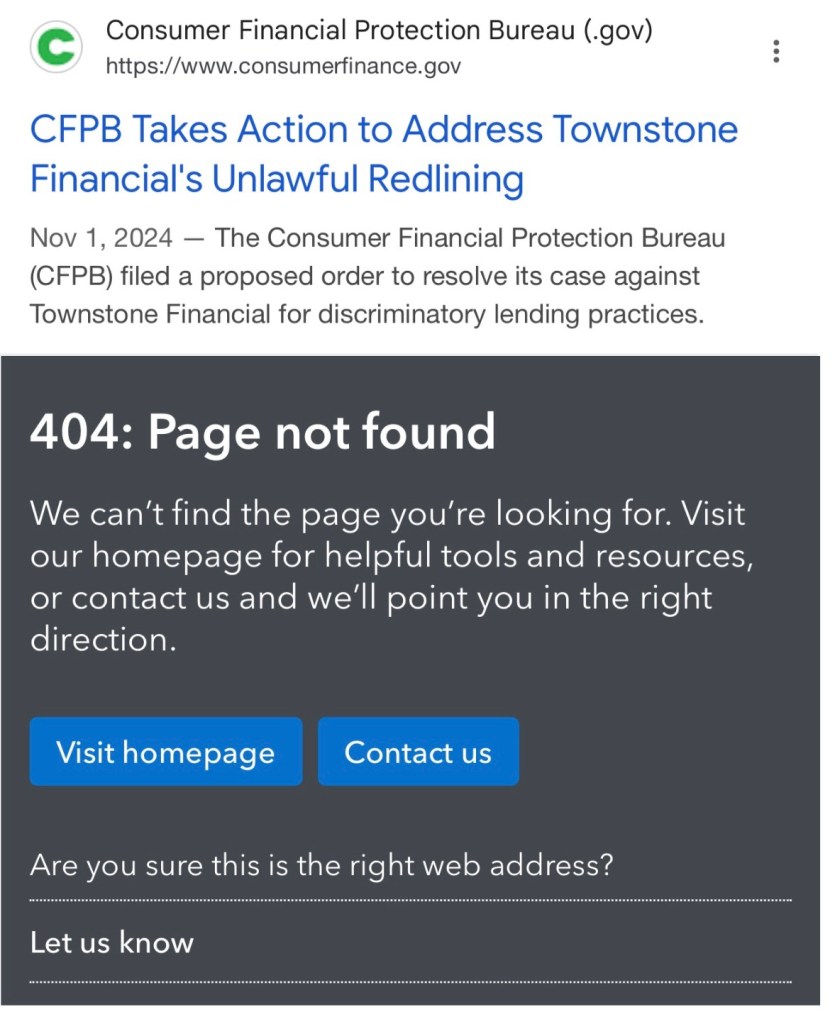
…The case began in 2020 when the consumer bureau accused Townstone of redlining* and breaking fair-lending laws by discouraging residents living in majority-Black neighborhoods from applying for its housing loans. It homed in on comments made during the company’s radio show and podcast, “The Townstone Financial Show,” saying they were intended to rebuff Black borrowers or those seeking to buy homes in certain neighborhoods.
Show guests and hosts — including Barry Sturner, Townstone’s chief executive — described Chicago’s South Side as a “jungle” and a “war zone” that became a “hoodlum” hive on weekends, according to the bureau’s legal complaint. Statistical analyses of Townstone’s mortgage loan applications showed that it drew far fewer from majority-Black neighborhoods than its lending peers, the agency said….
Christine Chen Zinner, a senior lawyer at Americans for Financial Reform, a progressive advocacy group, called the consumer bureau’s attempt to overturn the settlement “bananacakes.” The appellate panel’s unanimous decision that the fair-lending law applied was a clear signal that the case had merit, she said.
“Literally dropping the settlement sends a clear green light to businesses that discriminatory conduct is acceptable,” she said.
* What Is Redlining?
In recent years, the term “redlining” has become shorthand for many types of historic race-based exclusionary tactics in real estate — from racial steering by real estate agents (directing Black home buyers and renters to certain neighborhoods or buildings and away from others) to racial covenants in many suburbs and developments (barring Black residents from buying homes). All of which contributed to the racial segregation that shaped the way America looks today….
In a press release announcing the settlement**, CFPB Director Rohit Chopra stated, “The CFPB’s lawsuit against Townstone Financial included a major appellate court victory that makes clear that people are protected from illegal redlining even before they submit their application. The CFPB will continue to prosecute those who engage in modern-day redlining.”
[Or, at least, it used to.]
**
’We didn’t ought to ‘ave trusted ‘em. I said so, Ma, didn’t I? That’s what comes of trusting ‘em. I said so all along. We didn’t ought to ‘ave trusted the buggers.’
But which buggers they didn’t ought to have trusted Winston could not now remember.
Since about that time, war had been literally continuous, though strictly speaking it had not always been the same war. For several months during his childhood there had been confused street fighting in London itself, some of which he remembered vividly. But to trace out the history of the whole period, to say who was fighting whom at any given moment, would have been utterly impossible, since no written record, and no spoken word, ever made mention of any other alignment than the existing one. At this moment, for example, in 1984 (if it was 1984), Oceania was at war with Eurasia and in alliance with Eastasia. In no public or private utterance was it ever admitted that the three powers had at any time been grouped along different lines.
Actually, as Winston well knew, it was only four years since Oceania had been at war with Eastasia and in alliance with Eurasia. But that was merely a piece of furtive knowledge which he happened to possess because his memory was not satisfactorily under control. Officially the change of partners had never happened. Oceania was at war with Eurasia: therefore Oceania had always been at war with Eurasia. The enemy of the moment always represented absolute evil, and it followed that any past or future agreement with him was impossible. The frightening thing, he reflected for the ten thousandth time was that it might all be true. If the Party could thrust its hand into the past and say of this or that event, IT NEVER HAPPENED—that, surely, was more terrifying than mere torture and death?
The Party said that Oceania had never been in alliance with Eurasia. He, Winston Smith, knew that Oceania had been in alliance with Eurasia as short a time as four years ago. But where did that knowledge exist? Only in his own consciousness, which in any case must soon be annihilated.
And if all others accepted the lie which the Party imposed—if all records told the same tale—then the lie passed into history and became truth. ‘Who controls the past,’ ran the Party slogan, ‘controls the future: who controls the present controls the past.’ And yet the past, though of its nature alterable, never had been altered. Whatever was true now was true from everlasting to everlasting. It was quite simple. All that was needed was an unending series of victories over your own memory. ‘Reality control’, they called it: in Newspeak, ‘doublethink’.
George Orwell, 1984
SEE:
https://connect-the-dots-101.blog/2025/03/28/from-his-lips-to-your-ears/
AND:
https://connect-the-dots-101.blog/2025/03/27/from-the-leaders-lips/
 Connect the Dots 101
Leave a comment