“Chicago Real Estate Board Votes to Expel Members Who Sell to Black Families in White Neighborhoods”
“Formal segregation in Chicago slowly began to break down in the 1870s. The state extended the franchise to African Americans in 1870 and ended legally sanctioned school segregation in 1874. A state law against discrimination in public places followed in 1885, but it was rarely enforced and did nothing to address widespread employment discrimination. While not yet confined to the city’s nascent ghettos, blacks generally found housing available only within emerging enclaves.” Encyclopedia of Chicago—
…because…
“Chicago Real Estate Board Votes to Expel Members Who Sell to Black Families in White Neighborhoods”

African American Health Issues in the North: Discrimination and Poverty
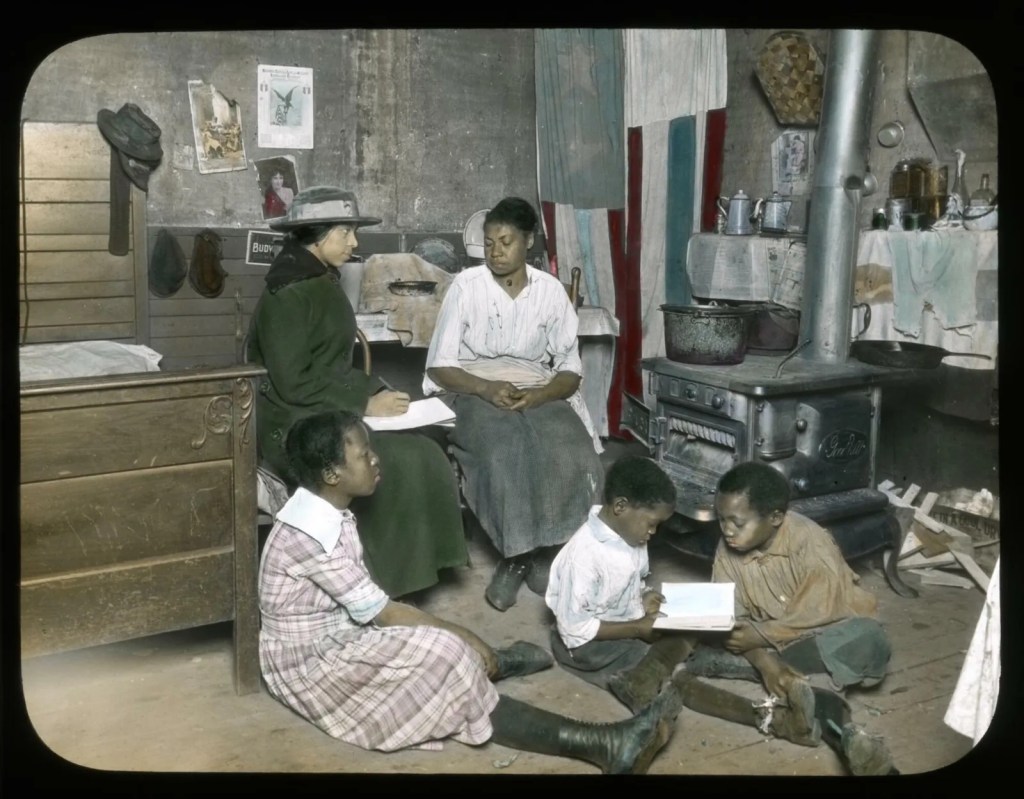
In a brilliant book The Condemnation of Blackness (2010), the social historian Khalil Gibran Muhammad looks closely at anti-black stereotypes advanced by white social scientists and thought-leaders in the urban North from 1890 to 1930. These anti-black social theorists portrayed African Americans as a degenerate race. The hostile doctrine of black inferiority they promoted paralleled—and gave a stamp of approval to—Jim Crow segregation and the violence perpetrated against blacks in the South. In the North, white social scientists justified their claims about black intelligence and morality on the basis of statistics that showed high levels of black disease, impoverishment, and criminality. That African American migrants from the South were forced to live as social outcasts in crowded segregated neighborhoods marked by dire poverty, job discrimination, and a dearth of social and health services—environmental conditions that were the hallmarks of social abandonment. No individual contributed more to the myth of black degeneracy and decline than Frederick L. Hoffman, chief statistician for the Prudential Insurance Company, whose book Race Traits and Tendencies of the American Negro was taken as gospel among Northern policy makers and white social reformers.[1]
 Connect the Dots 101
Leave a comment