
White House Health Report Included Fake Citations
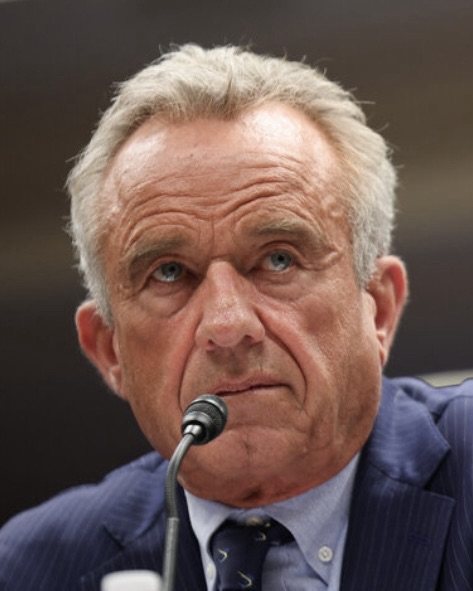
A report on children’s health released by the Make America Healthy Again Commission referred to scientific papers that did not exist.
The Trump administration released a report last week that it billed as a “clear, evidence-based foundation” (sic) for action on a range of children’s health issues.
But the report, from the presidential Make America Healthy Again Commission, cited studies that did not exist. These included fictitious studies on direct-to-consumer drug advertising, mental illness and medications prescribed for children with asthma.
“It makes me concerned about the rigor of report, if these really basic citation practices aren’t being followed,” said Katherine Keyes, a professor of epidemiology at Columbia University who was listed as the author of a paper on mental health and substance use among adolescents. Dr. Keyes has not written any paper by the title the report cited, nor does one seem to exist by any author.
The news outlet NOTUS first reported* the presence of false citations, and The New York Times identified additional faulty references. By midafternoon on Thursday, the White House had uploaded a new copy of the report with corrections.
* The MAHA Report Cites Studies That Don’t Exist
https://www.notus.org/health-science/make-america-healthy-again-report-citation-errors
National Science Foundation: uncovering fabricated or falsified data.
What’s the difference between fabrication and falsification?
According to NSF’s policy (45 CFR 689), fabrication means “making up data or results [or, in the case of RFK, Jr., entire papers!] and recording or reporting them”and falsification means “manipulating research materials, equipment, or processes, or changing or omitting data or results such that the research is not accurately represented in the research record.” Data fabrication occurs when researchers never conduct the experiments described and the observations, data, or other characteristics were never measured or recorded.
Data falsification occurs when researchers alter or misrepresent the underlying data, such as manipulating data images, changing or selectively omitting data points, or manipulating equipment or research processes to alter the outcomes to a desired effect. Falsification also includes the misrepresentation of the experimental conditions under which data were collected or what the data represent.
What are some consequences for data fabrication and falsification?
In all cases where NSF made a finding of research misconduct, researchers received a letter of reprimand. In many cases, NSF debarred researchers to prevent them from participating in government contracts, subcontracts, loans, grants, and other assistance programs for a specified period. [And/or] Other actions NSF often takes include requiring researchers attend a Responsible Conduct of Research course, barring researchers from serving as NSF-reviewers, and having them submit assurance and certification documents with future NSF submissions.
 Connect the Dots 101
Leave a comment